
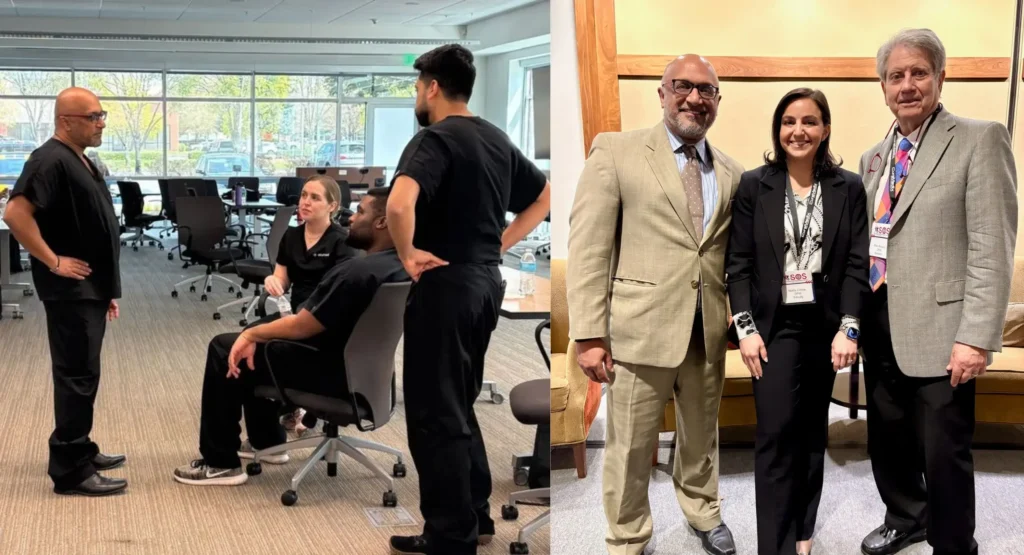
The landscape of sports-related foot and ankle injuries is evolving rapidly, demanding a shift from traditional isolated treatments to integrated, multidisciplinary care. At the recent SOS Sports Medicine Conference in Portland, Oregon, leading podiatrists, orthopedists, and physical therapists gathered to bridge the gap between clinical theory and practical, real-world application.
For practitioners looking to elevate patient outcomes, the event highlighted critical advancements in conservative therapies, surgical techniques, and biomechanical product design.
Multidisciplinary Approach to Treating Sports-Related Foot and Ankle Injuries
The primary takeaway from the SOS conference is that isolating treatment to a single discipline limits recovery potential. By combining the insight of orthopedists, the precision of podiatrists, the functional movement focus of physical therapists, and the science of footwear designers, clinicians leave with a well-rounded toolset. Embracing this holistic approach ensures your sports medicine practice remains at the cutting edge of injury prevention, treatment, and long-term athletic performance.
Advanced Surgical Procedures for Sports Medicine Ailments: The Acumed Cadaver Lab
When conservative management fails, surgical intervention must be flawless. Partnering with Acumed, the conference featured a hands-on cadaver lab dedicated to complex sports medicine ailments. This practical instruction allowed surgeons and podiatrists to practice advanced fixation techniques and structural repairs for high-impact foot and ankle trauma.
Reviewing case studies alongside live structural anatomy ensured that attendees could directly translate innovative surgical theories into precise operating room workflows.
Implementing Shockwave Therapy Indications and Custom Orthotics in Clinical Settings
Biopsies and imaging are only half the battle; state-of-the-art clinical tools are redefining recovery timelines. A major focus of the symposium was the practical application of extracorporeal shockwave therapy (ESWT). Rather than just discussing statistics, clinical demonstrations of the shockwave machine allowed providers to analyze its precise indications for chronic tendinopathies and plantar fasciitis.
In addition to advanced modalities, the event emphasized the immediate clinical preparation of custom orthotics. Practitioners walked through raw material selection and modification techniques necessary to address specific injury patterns right in the office. When combined with injury-specific physical therapy modules, these conservative measures offer a robust framework for non-invasive patient care.
Biomechanics in Shoe Design: Clinical Applications from Nike, Hoka, and Oofos
An information-rich angle of the conference was its deep dive into industry-level biomechanics. A specialized tour of the Nike headquarters provided an inside look at how leading engineers approach shoe design, structural support, and kinetic forces. Understanding how a major manufacturer manipulates materials to alter gait cycles gives providers a distinct advantage when prescribing footwear or modifications.
To ground this knowledge in retail reality, a session at the Portland Running Company Store focused on identifying specific commercial shoes tailored to distinct pathologies like overpronation, supination, and metatarsalgia. Thanks to partnerships with Hoka and Oofos, participants actively analyzed how maximum-cushion midsoles and recovery footwear relieve joint stress and accelerate post-training rehabilitation.
Endnote
The SOS Sports Medicine Conference reinforced a critical reality in modern sports medicine: successful foot and ankle injury treatment now depends on integrated, evidence-based care that combines biomechanics, regenerative therapy, precision surgery, and performance rehabilitation. From advanced ESWT applications and custom orthotics to surgical cadaver training and athlete specific footwear analysis, the conference showcased how innovation is reshaping recovery outcomes for both professional and recreational athletes.
As demand grows for non-invasive treatments, faster return to sport timelines, and personalized rehabilitation protocols, clinics that embrace multidisciplinary sports injury care will stand out in an increasingly competitive healthcare landscape. The integration of wearable technology, gait analysis, recovery footwear, and sports performance optimization is no longer optional. It is becoming the new standard of care. For providers committed to improving mobility, preventing re injury, and delivering elite level patient outcomes, these advancements represent the future of orthopedic and podiatric sports medicine.